

Dr. Abhishek Ray | Orthopaedic & Spine Surgeon
A wrist fracture after a small fall. A hip fracture following a slip at home. A spinal fracture discovered while investigating back pain.
In my practice, these are common circumstances in which osteoporosis first comes to attention. The patient may have had little reason to suspect weak bones beforehand.
That is the difficulty with osteoporosis: you can feel well while your bones become more vulnerable to fracture. Waiting for pain before thinking about bone health can mean missing an opportunity for prevention.
Osteoporosis affects both women and men. It involves loss of bone density and deterioration of bone structure, making fractures more likely—even after a fall from standing height or, in some cases, everyday movements. The wrist, hip and spine are common sites. [1]
THE CENTRAL MESSAGE
Do not wait for a fracture to think about bone health. Feeling well does not tell you how strong your bones are.
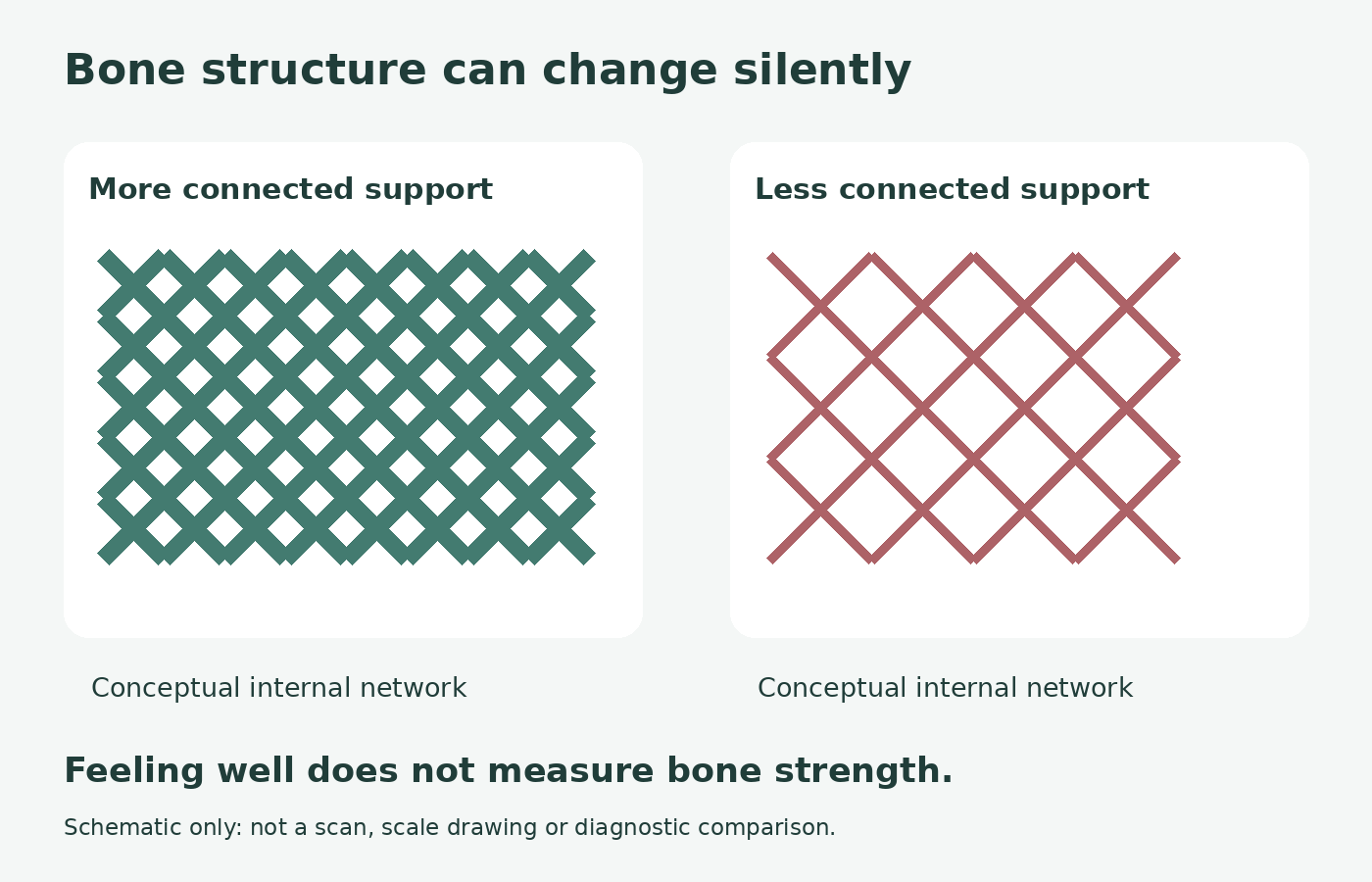
Why prevention deserves attention before the first fracture
Bone is living tissue, continually being renewed. When bone loss outpaces replacement, the skeleton can gradually weaken.
Ageing, hormonal changes after menopause, low body weight and certain illnesses or medicines can increase risk. Long-term glucocorticoid treatment is particularly relevant; patients may receive these medicines for lung disease, inflammatory conditions or other illnesses. Men should not assume that osteoporosis is exclusively a women’s problem. [1]
One missed opportunity I encounter is the lack of attention to bone health around menopause. Prevention should include reviewing diet, activity and individual risk—not waiting until a fracture occurs.
Adequate calcium, vitamin D and protein matter. Supplements may be needed when intake is inadequate or deficiency is identified, but the plan should fit the individual. Taking supplements without reviewing the wider picture is not a complete prevention strategy. [2]
When back pain deserves a closer look
In my practice, older adults commonly seek help for pain in several joints or aching muscles and soft tissues. These complaints need assessment, but they should not automatically be attributed to osteoporosis. When a patient has back pain, I look more closely at its pattern and their fracture risk.
Over 15 years of clinical practice, I have found that pain even when turning in bed can be a useful clue when considering a vertebral fracture rather than uncomplicated muscle spasm. I specifically ask about it, along with difficulty sitting or standing upright and relief when lying still. This is a clinical observation that helps guide assessment; it is not a stand-alone diagnostic test.
Although pain continuing for several days often brings patients to consultation, three to five days is not a waiting rule. New significant back pain in someone with osteoporosis risk factors may warrant earlier assessment and appropriate imaging. Loss of height or a progressively stooped posture can also prompt investigation. [3]
WHAT TO NOTICE — AND TELL YOUR DOCTOR
Changes to report:
• Loss of height or a gradually more stooped posture.
• New or persistent back pain, especially after a minor fall or ordinary activity.
• A previous wrist, hip or spinal fracture after a small fall—even if it has healed.
Relevant history to mention:
• Menopause, particularly if it occurred early.
• Long-term steroid treatment.
• Low body weight, frailty or a parent who had a hip fracture.
These clues and risk factors warrant discussion; they do not diagnose osteoporosis. Osteoporosis may also cause no noticeable symptoms. [1] [4]
Who should discuss bone-health assessment?
A previous fracture after relatively minor trauma is an important reason to investigate. Frailty, low body weight, long-term steroid exposure and other clinical risk factors also influence the decision.
Occasionally, a patient’s frail appearance prompts me to explore bone health before a fracture has occurred. Appearance is a starting point for assessment, however—not a diagnosis.
Similarly, I assess patients with obesity and multiple joint or bone pains, but those symptoms should not automatically be labelled osteoporosis. The cause of pain and the risk of fragile bones need to be considered separately. A clinician combines the history, examination and selected investigations rather than relying on body size alone. [4]
DEXA, spinal imaging and blood tests answer different questions
| Assessment | What it contributes |
|---|---|
| DEXA scan | Measures bone mineral density, helps assess fracture risk and provides a baseline for monitoring. |
| Spinal imaging | Looks for vertebral fractures and other explanations for symptoms. An old fragility fracture still matters. |
| Blood tests | Help identify underlying causes, deficiencies or conditions that resemble osteoporosis; they do not directly measure bone density. |
DEXA helps guide treatment, but it does not capture every aspect of bone strength. Its results must be interpreted alongside previous fractures, age, medicines and other risks. Follow-up scans can help assess treatment over time; their timing should be individualism. [4] [5]
A normal blood calcium result does not exclude osteoporosis. Blood tests remain useful for investigating contributing conditions. Selected bone-turnover markers may also assist treatment monitoring, but they do not replace DEXA or clinical assessment for diagnosis. [6]
For more on interpreting spinal imaging alongside symptoms and examination, read Spine MRI Findings: Do They Explain Your Pain?
Cost is a real concern in my practice. Explaining what a test could change in the treatment plan helps patients make an informed decision about proceeding.
UNDERSTAND YOUR TESTS
A normal blood calcium result does not rule out osteoporosis. A DEXA score is interpreted with your fracture history and other risks.
“Will taking more calcium solve the problem?”
This is an important misconception to address.
I often explain that knee pain from osteoarthritis should not be interpreted as evidence that the patient simply needs more calcium. Osteoarthritis and osteoporosis require different assessments, even when they occur together.
For osteoporosis, calcium and vitamin D support treatment, but they do not replace medicines when fracture risk warrants them. Some medicines slow bone loss; others help build bone. The choice depends on the person’s fracture history, overall risk, health conditions and practical circumstances—not solely on a score or a standard supplement prescription. [7]
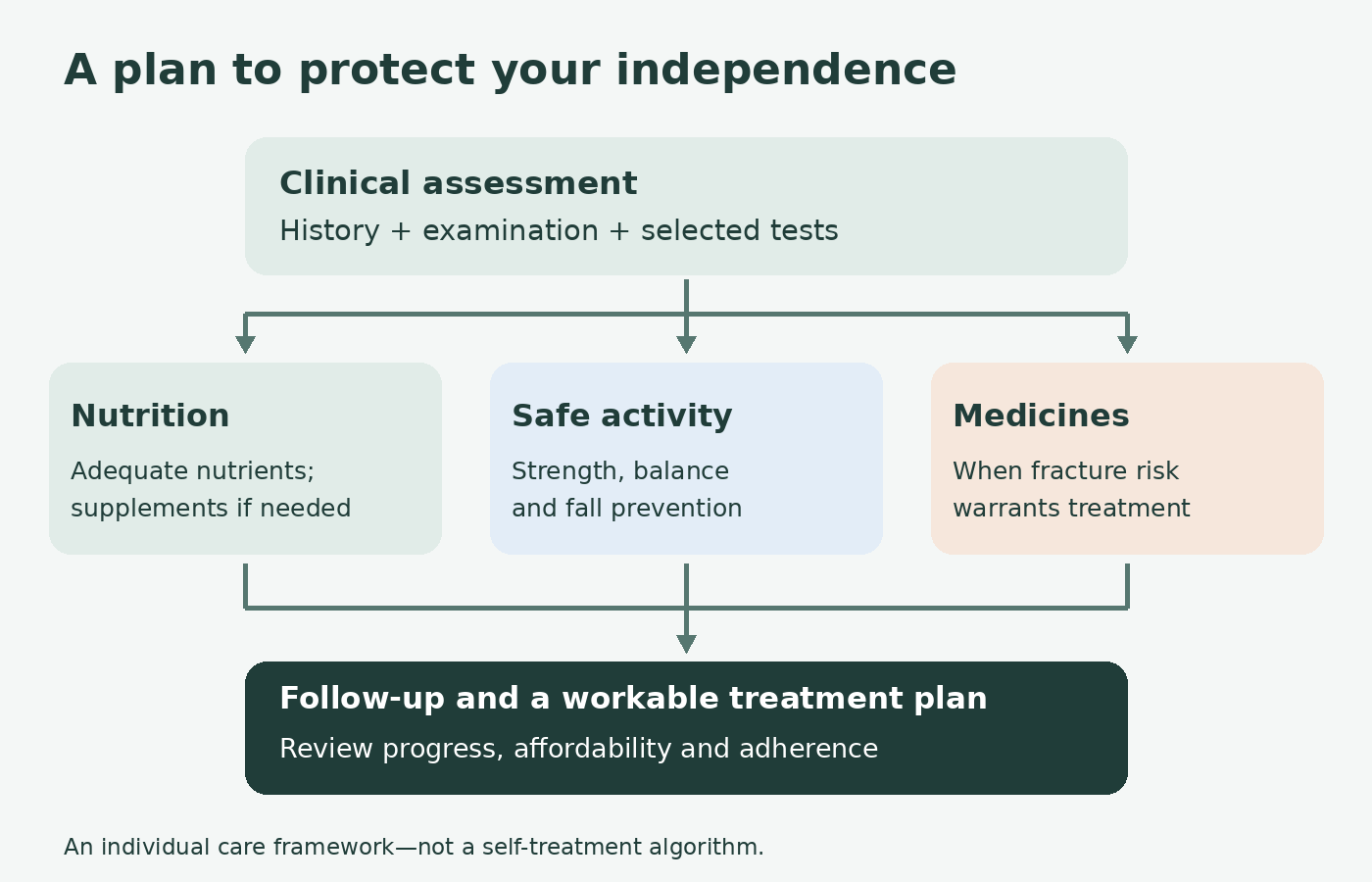
Keep moving—with an appropriate plan
I encourage patients to remain mobile and preserve their independence. Walking is often an accessible starting point. I also discuss strength training, although many patients in our region are unfamiliar with it or hesitant to begin.
An appropriate programme combines weight-bearing activity, muscle strengthening and balance work. Walking alone does not address every need.
After a vertebral fracture, exercise and lifting advice must be adapted. Patients should seek guidance before increasing loads or attempting demanding movements. The aim is safe, progressive activity, not exercising through significant pain. Reducing household fall hazards is another practical part of prevention. [2]
Treatment needs to remain practical after the pain settles
In my experience, patients discontinue treatment for several overlapping reasons: medicine costs, the monotony of repeated doses, limited family support and the absence of symptoms. Gradually, bone health loses priority.
These barriers deserve discussion. Tell your clinician if treatment is unaffordable, inconvenient or causing problems. A workable plan is more useful than a prescription that cannot be sustained.
Treatment duration and any interruption should be reviewed with the prescriber. Feeling better alone is not a reason to stop. [8]
The goal is to prevent the next fracture and preserve independence. If you have sustained a fracture after a minor fall, ask whether your bone health has been assessed—even if the fracture itself has healed.
TAKE-HOME POINTS
1. Osteoporosis can remain silent until a fracture.
2. A minor-fall fracture should prompt a bone-health discussion.
3. DEXA, imaging and blood tests have different roles.
4. Calcium alone is not a complete osteoporosis treatment plan.
5. Stay active with suitable strength and balance work.
6. Discuss cost and treatment difficulties before stopping medicines.
Dr. Abhishek Ray
Orthopaedic & Spine Surgeon
Ekam Healthcare, Ambuja, City Centre, Durgapur
Appointments: +91 7797046722 | boneandspinecare.com
Sources and further reading
2. NOGG: Nutrition, exercise and fall prevention
3. NOGG: Summary of recommendations
4. NOGG: Fracture risk assessment
5. NIAMS: Bone mineral density tests
6. Royal Osteoporosis Society: Other scans and tests