
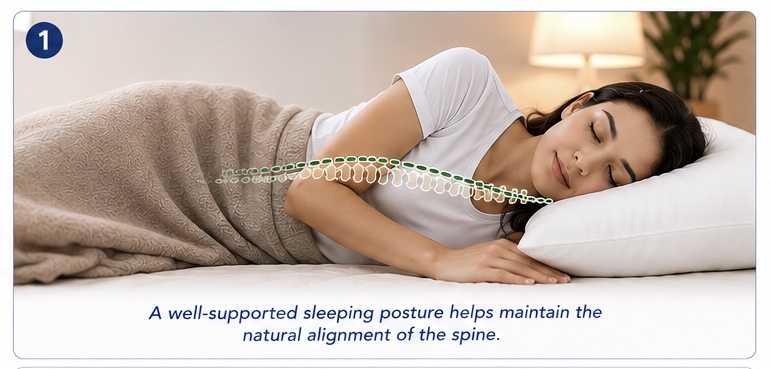
Sleep is essential for physical recovery. In addition, it gives muscle and joints time to relax and overall, affects general wellbeing. Since we spend nearly one-third of our lives in bed, the position or posture in which we sleep can significantly influence the health of the neck, back and hips. While sleeping posture may not be the sole cause of spinal pain, poor positioning combined with an unsuitable pillow or mattress can aggravate existing neck pain, low-back pain, stiffness and muscle fatigue.
Therefore, the objective of good sleeping posture is simple: maintain the natural alignment of the spine. The head, neck, shoulders, pelvis and lower back should be supported in a neutral and comfortable position, without excessive bending, twisting or sagging.
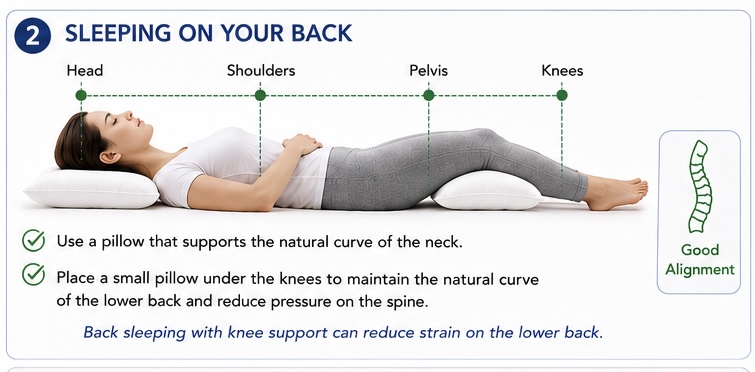
Sleeping on Your Back: Often the Best Position for Alignment
To begin with, for many people, sleeping on the back is one of the most spine-friendly positions. It allows body weight to be distributed evenly and reduces unnecessary rotation of the neck and trunk. When done correctly, it helps maintain the natural curves of the cervical and lumbar spine.
Use a pillow that supports the neck without pushing the head too far forward. A pillow that is too high can flex the neck, while one that is too flat may allow the head to fall backwards. A small pillow placed beneath the knees is often helpful, as it reduces strain on the lower back and helps preserve the natural curve of the lumbar spine.
However, people with loud snoring or obstructive sleep apnoea may find back sleeping less suitable. They should discuss the most appropriate sleep position with their doctor.
Sleeping on Your Side: A Comfortable and Effective Alternative
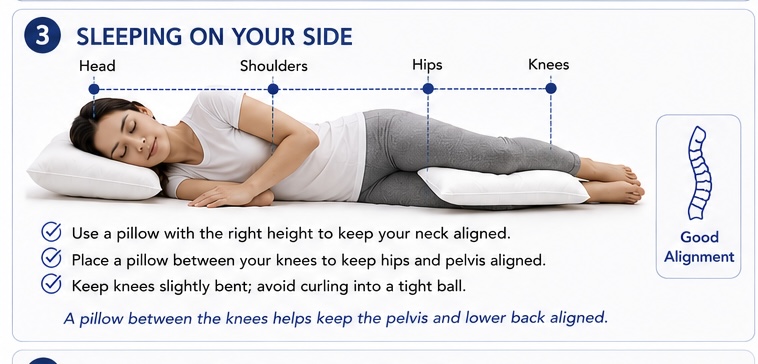
Similarly, sleeping on the side is a common and generally healthy option, especially for people who snore, have mild sleep-disordered breathing or are pregnant. The important principle is to prevent the head and neck from dropping downward or being pushed upward.
The pillow should fill the gap between the shoulder and the side of the head so that the neck remains in line with the rest of the spine. If the pillow is too thin, the head tilts downwards; if it is too thick, the neck bends upwards. Both can contribute to morning neck pain and stiffness.
Placing a pillow between the knees is particularly useful for side sleepers. It keeps the hips and pelvis aligned, prevents the upper leg from pulling the lower back into rotation and can reduce pressure on the hips. Try to keep the knees slightly bent rather than tightly curled into a fetal position.
Sleeping on Your Stomach: Usually Best Avoided
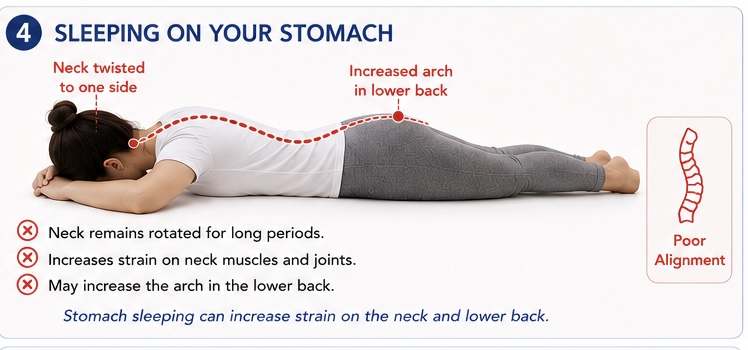
Sleeping on the stomach is generally the least favourable position for spinal health. It requires the neck to remain turned to one side for prolonged periods, which can strain the neck muscles and cervical joints. It may also increase the arch in the lower back, especially if the mattress is soft.
If stomach sleeping is the only comfortable option, use a very thin pillow—or no pillow—under the head to reduce neck extension. A small pillow beneath the pelvis and lower abdomen may help reduce stress on the lower back. Gradually training yourself to sleep on the side or back is often preferable if neck or back pain is recurrent.
The Role of the Mattress and Pillow
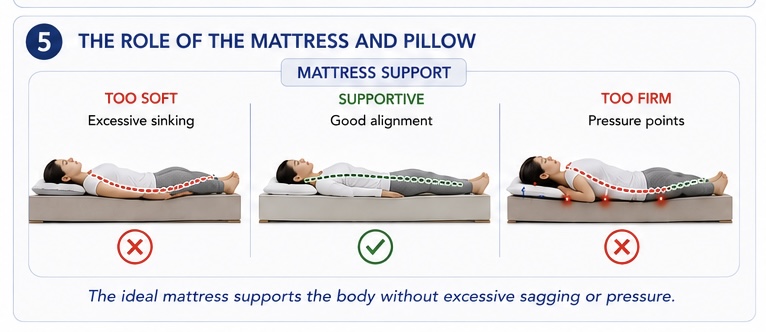
In addition to posture, your mattress and pillow also affect spinal comfort. However, there is no single “perfect” mattress for everyone. A good mattress should support the body without allowing the hips and shoulders to sink excessively. For many individuals, a medium-firm mattress provides a practical balance between comfort and support. A mattress that is visibly sagging, uneven or more than several years old may no longer provide adequate support.
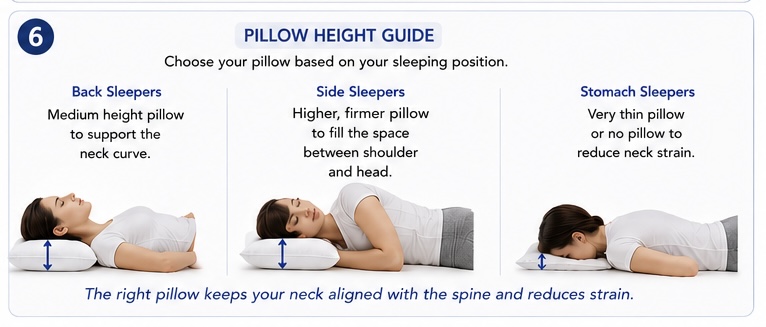
Pillow selection should depend on sleeping position, body build and shoulder width. Back sleepers usually need a medium-height pillow, side sleepers often need a slightly firmer and higher pillow, and stomach sleepers require the thinnest pillow.
When Should You Seek Medical Advice?
It should be remembered that occasional stiffness after an awkward night’s sleep is common. However, persistent neck or back pain, pain radiating into the arms or legs, numbness, tingling, weakness, difficulty walking, or pain that regularly disturbs sleep should not be ignored. These symptoms may require clinical assessment.
Thus, small changes in sleeping posture can make a meaningful difference to comfort and spinal health. Combined with regular exercise, good posture during the day and appropriate medical advice when needed, better sleep positioning can support a healthier, more comfortable spine.

Sleep well. Wake refreshed. Move into your day with energy.
Tags :
#Spine Health #Sleeping Posture #Back Pain Relief #Neck Pain #Healthy Sleep Habits #Sleep Ergonomics #Spinal Alignment #Back Sleeping #Side Sleeping #Pillow Support #Mattress Selection #Low Back Pain #Cervical Spine Care #Orthopaedic Health #Patient Education
Related Articles
2. Neck Pain : A Modern Epidemic In Office-goers
3. Back Pain : All You Wanted To Know
4. Good Sleep For Good Health ( External link)