

Dr Abhishek Ray | Orthopaedic & Spine Surgeon | Ekam Healthcare | 3 October 2026
“Text neck” is a popular description for neck discomfort associated with prolonged screen use. It does not, by itself, diagnose a damaged disc or a diseased spine. If looking at your phone makes your neck ache, try a more comfortable setup, support your arms and change position regularly. Persistent pain or neurological symptoms deserve assessment.[1,2]
Why your neck may ache after using a phone
You finish answering messages, watching a video or helping your child with online homework, then notice an ache across the neck and shoulders. It is easy to blame the phone—or worry that a disc has “slipped”. The symptom is real, but its cause cannot be established from screen use alone.
Your neck contains seven vertebrae, with discs, joints, ligaments and muscles that support and move your head. Nerves travel from the neck into the arms; the spinal cord carries signals between the brain and the rest of the body. Ordinary local soreness and symptoms suggesting nerve or spinal-cord involvement therefore need different assessments.[3,4]
Holding an uncomfortable position for a long period can aggravate symptoms. Repetitive work, unfamiliar activity, poor sleep and stress may also contribute. Phone use is only one part of that picture: reading, studying, sewing and desk work can create similar demands. Changing the task and improving comfort are more useful than deciding that one device is inherently harmful.[1,5]

Figure 1. A seated adult views a raised phone with forearms supported on a cushion.
Does looking down damage your discs
Looking down is a normal movement. Pain after scrolling does not prove that the phone has damaged a disc, and there is no single neck angle that separates “safe” from “damaging” use.
Research on posture and pain needs careful interpretation. A cross-sectional study of 150 young adults aged 18–21 found no association between its measures of “text neck” posture and neck pain.[2] That finding does not prove that prolonged phone use can never provoke symptoms. It does show why a posture photograph cannot establish the cause of an individual’s pain or predict future degeneration.
From the clinic: My emphasis is on the duration of an uncomfortable position and the patient’s symptoms, rather than blaming the phone itself. I encourage comfortable, varied positioning instead of asking people to hold a rigid “perfect posture” all day.
Treat ergonomic adjustments as practical ways to improve comfort. They are not a guarantee against pain, nor a treatment that reverses age-related changes in the spine.
What an X ray showing straightening actually tells you
An X-ray report may mention “straightening” or “loss of cervical lordosis”. This describes the shape seen on that image. It is not a complete diagnosis, and it does not establish that a phone has damaged your neck.
Straightening should not automatically be called proof of muscle spasm either. Positioning during the image and normal variation can affect the appearance. A study comparing people with acute neck pain, chronic neck problems and a normal comparison population did not support the assumption that loss of lordosis reliably indicates pain-related muscle spasm.[6]
The useful question is whether the findings fit your symptoms and examination—and whether they change treatment. A report should help clinical reasoning, not become a frightening label on its own.

Figure 2. Screen discomfort and an X-ray description do not alone establish a diagnosis.
Symptoms that need a closer look
Local aching, stiffness and soreness around the tops of the shoulders may occur with mechanical neck pain. Symptoms may vary with activity or position. However, “text neck” must not become a label that explains every symptom after screen use.[5]
Pain travelling down an arm, persistent tingling, numbness or weakness may indicate irritation of a nerve root, although other causes are possible. A clinician may examine the shoulder and peripheral nerves as well as the neck.[3] Visual disturbance, significant dizziness or leg weakness should not simply be attributed to phone posture.
Seek urgent medical attention if
- You develop new or worsening weakness, clumsy hands, difficulty with buttons or an unsteady walk. These may indicate a neurological problem.[4,7]
- Neck pain follows significant trauma, or comes with fever, marked illness, unexplained weight loss or a history that raises concern for infection or cancer.[8]
- Pain is severe, rapidly worsening or accompanied by new neurological symptoms.[7]
Seek emergency assessment for sudden difficulty walking or coordinating movements, new loss of bladder or bowel control with neurological symptoms, or sudden facial droop, speech difficulty or limb weakness. Sudden visual loss, or a severe new headache with fever and neck stiffness, also needs emergency assessment. These symptoms are not routine “text neck”.[7–9]
These warning signs do not confirm a particular diagnosis; they change how quickly someone should be assessed.
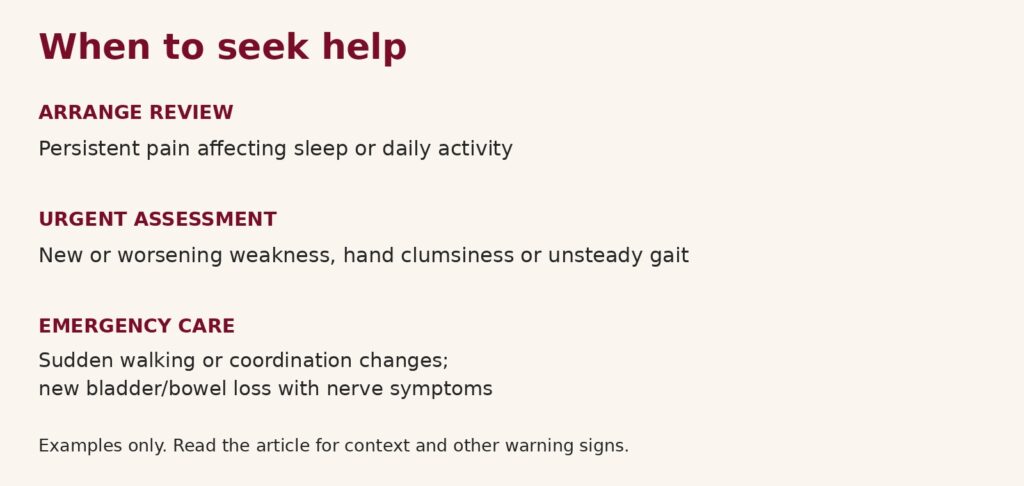
Figure 3. Examples of symptoms needing review, urgent assessment or emergency care.
A phone setup you can actually maintain
Bring the phone up, support your arms, and keep changing position. This is the practical advice I want patients to remember. It is a starting point to adapt to your body, eyesight, task and available furniture.
1. Raise the screen towards eye level. Choose a height that reduces prolonged downward bending without making you lift your chin or tense your shoulders. Exact eye-level positioning is not compulsory.
2. Support your elbows or forearms. A desk, armrests or a cushion can help. Holding a phone high with unsupported arms may simply move the discomfort into your shoulders.[5]
3. Make the screen easy to read. Use a comfortable viewing distance and enlarge the text rather than repeatedly bringing your face close to the phone. Persistent visual difficulty needs appropriate assessment.
4. Change position and take brief movement breaks. My practical reminder is every 30–45 minutes, or sooner if uncomfortable. This interval is a habit-building suggestion, not a proven safe-use threshold. A brief walk or change of task may be enough to interrupt sustained sitting.[1]
5. For long calls, use a headset or speakerphone when appropriate. Avoid holding the phone between the shoulder and ear. Do not use a device in a way that distracts you while walking, driving or crossing a road.
For students using a phone for lessons, a stable stand and a suitable table may be more sustainable than holding the device throughout a class. For prolonged computer work, arrange the screen and input devices so that the neck and arms can remain comfortable. Expensive furniture is not a prerequisite for useful changes.
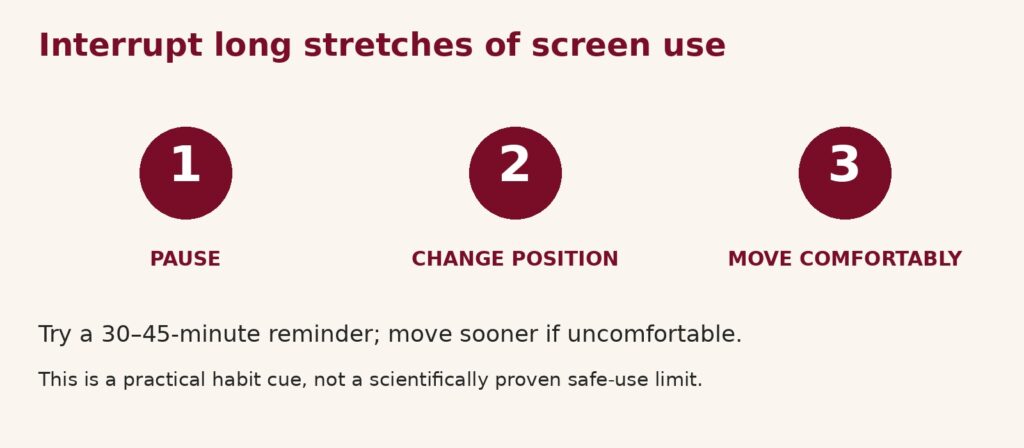
Figure 4. Pause, change position and move comfortably during prolonged screen use.
Do you need an X ray or MRI
The first assessment is usually a conversation and examination: where the pain is, what changes it, whether it travels into an arm, and whether there are changes in strength, sensation, reflexes or walking. Screen time alone is not a reason for an MRI.[3,8]
Uncomplicated recent neck pain without trauma, neurological deficit or other warning signs often does not need immediate imaging. Tests become more useful when the findings may change management—for example, suspected nerve or spinal-cord involvement, serious underlying disease, relevant trauma, or persistent symptoms despite an appropriate treatment plan.[1,8]
X-rays mainly assess bones and alignment; MRI provides more information about discs, nerves and the spinal cord. Neither test replaces the examination. Persistent pain that interferes with sleep or daily activity warrants review. You do not need to wait three months before seeking help, and warning signs should be assessed earlier.
Treatment usually starts with activity and rehabilitation
For uncomplicated neck pain, treatment commonly begins with explanation, temporary adjustment of aggravating tasks and comfortable movement. Complete rest or routine prolonged collar use is generally unhelpful unless a clinician has identified a specific reason to restrict movement.[10]
If symptoms persist or recur, physiotherapy can help develop a progressive programme of mobility, strength and endurance. The programme should suit the person rather than depend on repeatedly forcing the neck into one position. Manual treatment may sometimes help symptoms, but it should support an active rehabilitation plan rather than replace it.[11]
Figure 5. Illustration of a patient discussing neck symptoms and an individual rehabilitation plan with a physiotherapist.
Heat or cold may provide short-term comfort; protect the skin. Pain medicines may sometimes help, but the choice depends on medical history, other medicines and individual risk. This article does not prescribe a drug or dose. Seek professional advice rather than repeatedly self-medicating.[10]
Injections or surgery are not routine treatments for screen-related muscular discomfort. They may be considered for a separately established condition with an appropriate indication, such as selected nerve compression or spinal-cord compression. Progressive neurological problems require timely specialist assessment.[3,4]
Recovery and recurring symptoms
Many episodes of uncomplicated neck pain improve over a few weeks, but individual recovery varies.[10] Useful progress includes sleeping more comfortably, turning the head more easily and managing work with fewer interruptions. Recovery does not require an X-ray to show a particular curve.
If the same task repeatedly provokes symptoms, review the setup, workload and rehabilitation plan. If pain is worsening, new symptoms appear or progress stalls, reassessment is more useful than assuming it is still just “text neck”.

Figure 6. Illustration of a short walking break away from the desk during a screen session.
Common questions
Should I stop using my phone completely
Usually, a complete ban is unnecessary for uncomplicated discomfort. Shorten tasks that clearly provoke pain, use support and alternate activities. The aim is a manageable routine. If symptoms include weakness, persistent numbness or other warning signs, changing the phone setup should not substitute for assessment.
Is there one correct posture
No single position needs to be held all day. A setup can be comfortable for a short task and tiring during a long one. Support and movement are practical tools; you do not need to monitor every neck movement or remain stiffly upright to protect your spine.
Will a neck collar speed recovery
A collar is not a routine solution for ordinary screen-related neck discomfort. Keeping the neck moving comfortably is usually preferable. There are specific circumstances in which a clinician may recommend support or restriction, so follow individual advice if you have an injury or a diagnosed condition.[10]
Can exercise reverse a straightened neck
Exercise is intended to improve movement, capacity and function—not to guarantee a particular X-ray appearance. A change in the reported curve is not the only measure of recovery. Choose exercises based on assessment and tolerance, especially when there are arm symptoms or neurological findings.[6,11]
Can children get this discomfort too
Children and teenagers may also report neck discomfort during study or screen use. Provide a comfortable setup, movement opportunities and manageable study periods. Do not diagnose a child from posture alone. Persistent or unusual pain, injury, fever, weakness or functional change should be assessed by a clinician.
Take home messages
- “Text neck” describes a symptom context; it does not prove disc damage.
- Raise the phone comfortably and support your arms.
- Change position regularly instead of chasing a rigid perfect posture.
- Straightening on an X-ray is not a diagnosis by itself.
- Imaging is chosen according to symptoms and examination.
- Progressive exercise often forms part of treatment for persistent symptoms.
- Weakness, hand clumsiness, gait change and other warning signs need timely assessment.
Arrange assessment when pain is persistent, progressive, severe, associated with neurological symptoms or interfering with sleep and daily activity. This article provides general education and cannot diagnose an individual reader.
Dr Abhishek Ray
Orthopaedic & Spine Surgeon
Ekam Healthcare, City Centre, Durgapur, West Bengal
Related Links
- Neck Pain Explained: Common Causes and When to Seek Help
- Neck Pain : A Modern Epidemic In Office-goers
- American Academy of Orthopaedic Surgeons. Cervical Radiculopathy (Pinched Nerve). OrthoInfo.
- American Academy of Orthopaedic Surgeons. Cervical Spinal Cord Compression. OrthoInfo.
- Neck Pain: Revision 2017. Journal of Orthopaedic and Sports Physical Therapy. 2017;47(7):A1–A83
References
Web resources accessed 3 October 2026. Numbered references relate to the adjacent claims; practical advice attributed to Dr Ray comes from his confirmed author insight.
1. East Lancashire Hospitals NHS Trust. Neck Pain. https://elht.nhs.uk/services/integrated-msk-pain-and-rheumatology-service/patient-information/spinal-pain/neck-pain
2. Damasceno GM, Ferreira AS, Nogueira LAC, Reis FJJ, Andrade ICS, Meziat-Filho N. Text neck and neck pain in 18–21-year-old young adults. European Spine Journal. 2018;27:1249–1254. https://pubmed.ncbi.nlm.nih.gov/29306972/
3. American Academy of Orthopaedic Surgeons. Cervical Radiculopathy (Pinched Nerve). OrthoInfo. https://www.orthoinfo.org/diseases–conditions/cervical-radiculopathy-pinched-nerve/
4. American Academy of Orthopaedic Surgeons. Cervical Spinal Cord Compression. OrthoInfo. https://www.orthoinfo.org/diseases–conditions/cervical-spondylotic-myelopathy-spinal-cord-compression/
5. Bexley MSK Service. Mechanical Neck Pain. https://msk-bexley.nhs.uk/conditions/neck-pain/mechanical-neck-pain
6. Helliwell PS, Evans PF, Wright V. The straight cervical spine: does it indicate muscle spasm? Journal of Bone and Joint Surgery British Volume. 1994;76(1):103–106. https://pubmed.ncbi.nlm.nih.gov/8300650/
7. NHS. Cervical spondylosis. https://www.nhs.uk/conditions/cervical-spondylosis/
8. Expert Panel on Neurological Imaging; Eldaya RW et al. ACR Appropriateness Criteria Cervical Pain or Cervical Radiculopathy: 2024 Update. Journal of the American College of Radiology. 2025;22(5S):S136–S162. doi:10.1016/j.jacr.2025.02.035. https://pubmed.ncbi.nlm.nih.gov/40409873/
9. NHS. Headaches. https://www.nhs.uk/symptoms/headaches/
10. NHS. Neck pain. https://www.nhs.uk/symptoms/neck-pain-and-stiff-neck/
11. Blanpied PR et al. Neck Pain: Revision 2017. Journal of Orthopaedic and Sports Physical Therapy. 2017;47(7):A1–A83. doi:10.2519/jospt.2017.0302. https://digitalcommons.uri.edu/pt_facpubs/25/