

Most neck pain is mechanical: muscles, joints and other tissues become painful or sensitive without dangerous damage. Many episodes improve with sensible activity, short-term symptom control and progressive exercise. Seek prompt assessment if pain follows significant trauma or is accompanied by progressive weakness, hand clumsiness, walking difficulty, fever, unexplained weight loss, or new bladder or bowel dysfunction.
Written and medically reviewed by Dr Abhishek Ray, Orthopaedic & Spine Surgeon. Last medically reviewed: 19 September 2026.
Neck pain is a symptom, not a scan diagnosis
Neck pain is extremely common and can interfere with work, sleep, driving and ordinary movement. Globally, it remains an important cause of disability, but “neck pain” is not one single disease. It may arise from temporarily overloaded or sensitive muscles and joints, irritation of a cervical nerve root, trauma, inflammatory disease, infection, tumour, or compression of the spinal cord. Most cases are not caused by a dangerous condition, yet the minority with neurological or systemic warning signs must be recognised early.[1,2]
The words matter. Cervical spondylosis describes age-related changes in the discs, joints and bones of the neck. “Spondylitis” generally refers to inflammation and should not be used as a catch-all label. Neither term should be diagnosed from pain alone.
A practical point from Dr Abhishek Ray: Many patients—irrespective of age—describe any neck pain as “cervical spondylitis.” In younger adults, however, neck pain is often mechanical and may involve muscular overload or spasm rather than clinically significant degenerative disease. Even when age-related changes appear on imaging, they are not automatically the cause of the symptoms.
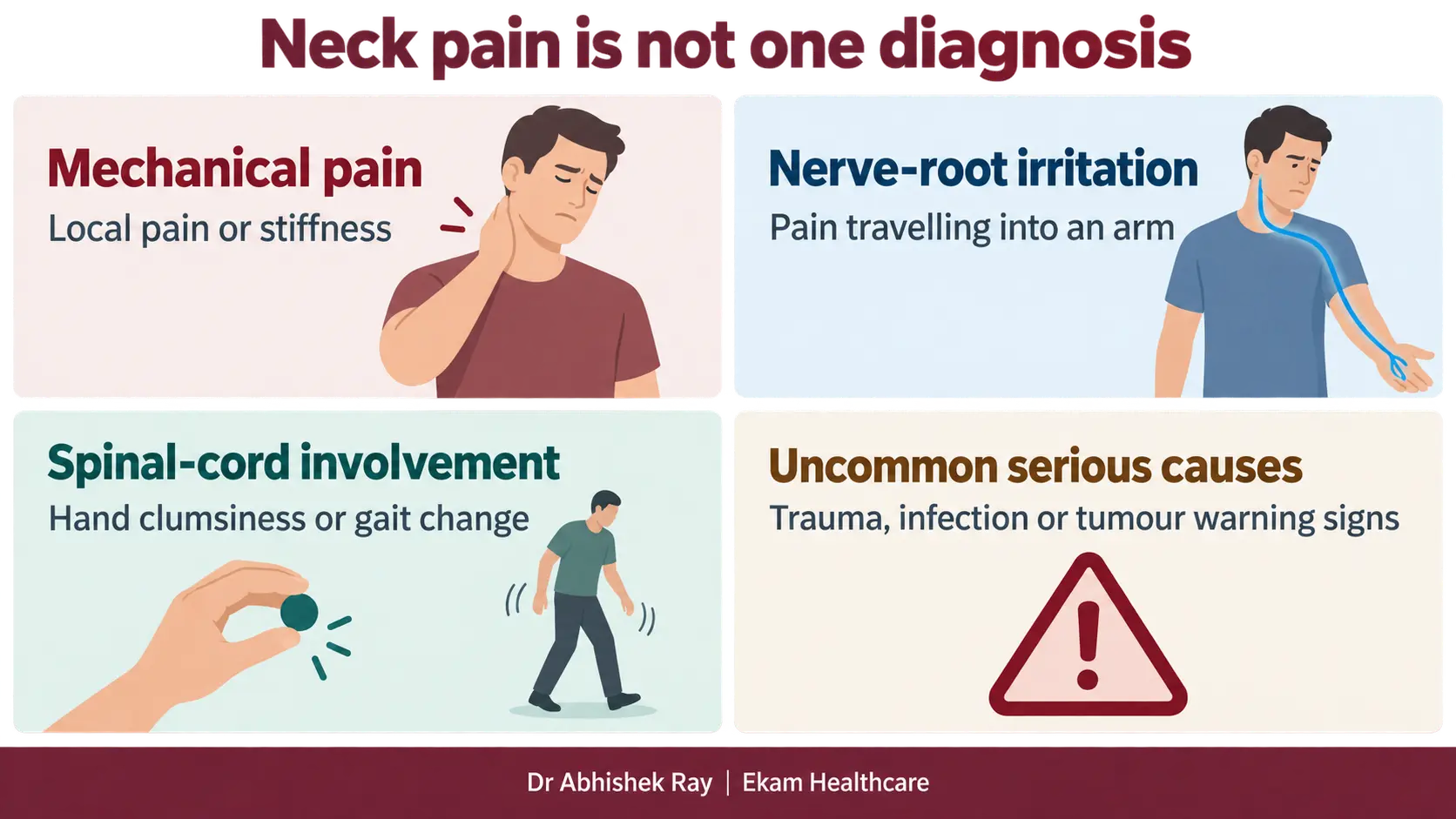
What structures can produce neck pain?
The cervical spine contains seven vertebrae, discs, facet joints, ligaments, muscles, nerve roots and the spinal cord. Pain may be felt locally in the neck, referred towards the shoulder blade or back of the head, or travel into an arm when a nerve root is irritated. The exact painful structure often cannot be identified with certainty in uncomplicated neck pain—and treatment does not always require naming one structure.
Common patterns and causes
1. Mechanical or nonspecific neck pain
This is the common clinical pattern: pain and stiffness influenced by position or movement, without a progressive neurological deficit or systemic warning sign. Prolonged static work, unfamiliar activity, poor sleep, stress, reduced conditioning or a sudden awkward movement may contribute. A “muscle spasm” can be part of the response, but it does not necessarily mean that the spine has been damaged. For more on posture and prolonged screen use, see Neck Pain: A Modern Epidemic in Office-goers.
2. Cervical spondylosis
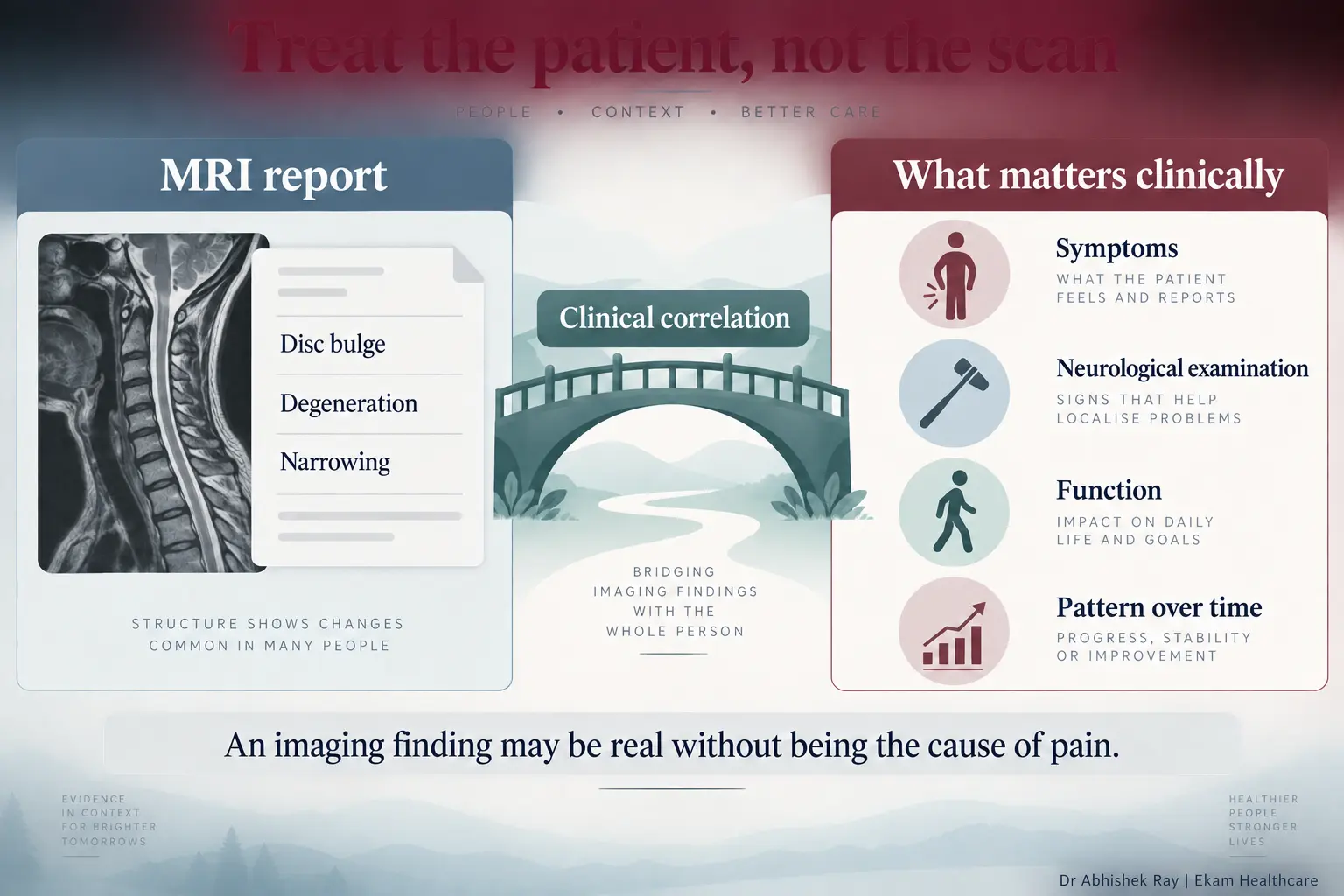
Age-related disc and joint changes become more frequent over time. They may contribute to symptoms, but they are also common in people without pain. A systematic review of asymptomatic populations found degenerative imaging features even in younger adults, with frequency increasing with age.[3] The scan therefore needs to match the history, examination and symptom pattern.
3. Cervical radiculopathy
A cervical nerve root may become irritated or compressed. Pain often travels from the neck or shoulder into the arm or hand and may feel electric, burning or shooting. Tingling, numbness, altered reflexes or weakness can occur. Arm pain alone does not prove a compressed nerve; the distribution and examination findings matter.
4. Cervical myelopathy
Myelopathy means dysfunction of the spinal cord. It can develop when the cord is compressed in a narrowed cervical canal. Possible clues include loss of hand dexterity, dropping objects, buttoning difficulty, imbalance, a stiff or unsteady gait, leg weakness or stiffness, and—in more advanced cases—bladder or bowel disturbance. Progressive symptoms warrant prompt specialist assessment because delay can allow irreversible neurological loss.[4]
5. Less common but important causes
Fracture, infection, inflammatory disease, tumour and pain referred from another region are much less common than mechanical pain. Their possibility depends on the clinical context: trauma, fever, immune suppression, cancer history, unexplained weight loss, severe night pain, vascular symptoms and other examination findings.
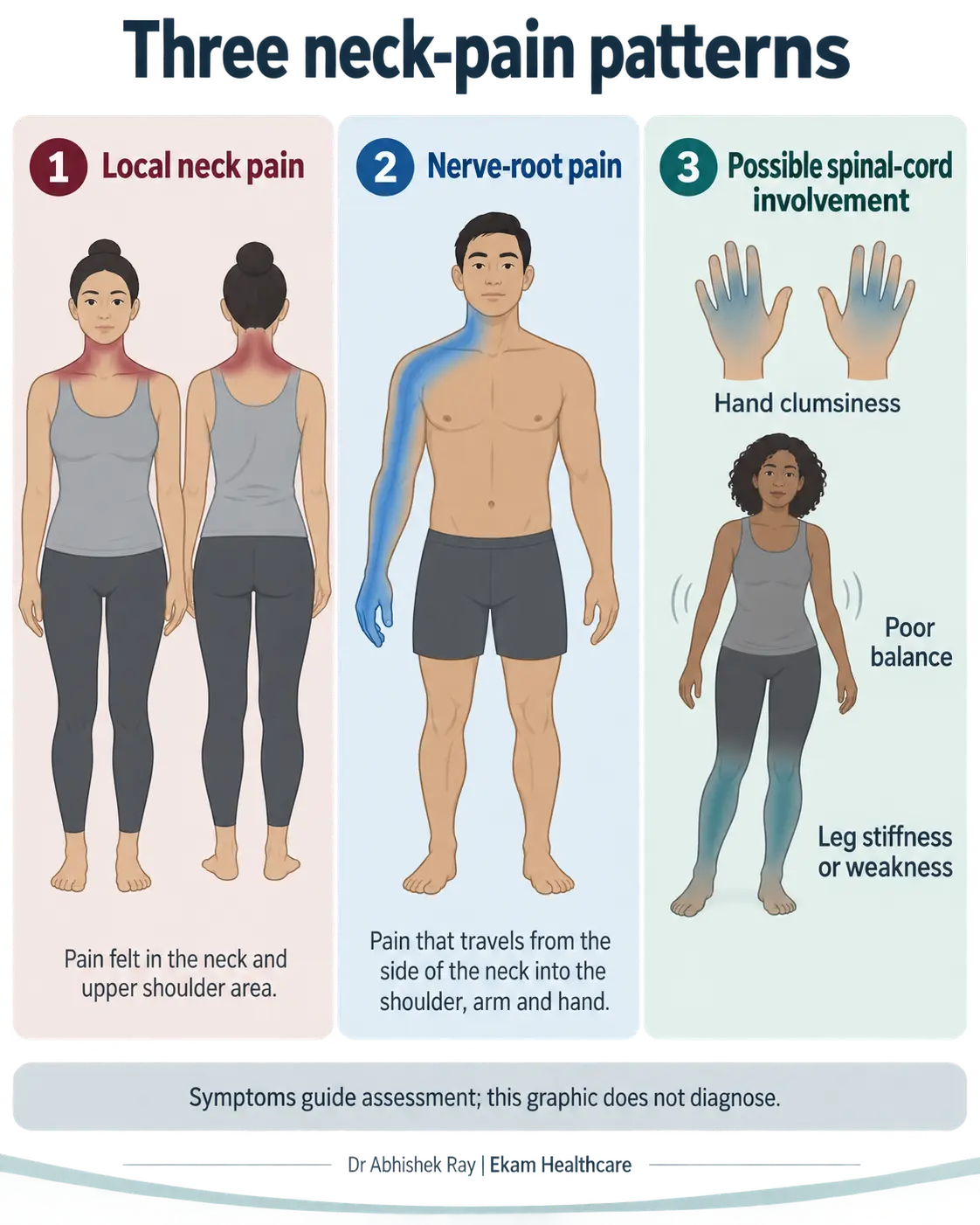
What does the symptom pattern suggest?
| Pattern | Typical features | What it may suggest | Recommended response |
|---|---|---|---|
| Mainly local neck pain | Pain or stiffness influenced by movement or sustained position; no neurological deficit | Mechanical or nonspecific neck pain is more likely | Remain active within tolerance; review if worsening or not improving |
| Pain travelling into one arm | Electric, burning or shooting pain; possible tingling, numbness or weakness | Possible cervical nerve-root irritation | Clinical assessment if persistent, severe or associated with weakness |
| Hand clumsiness or gait change | Dropping objects, poor dexterity, imbalance, leg stiffness or weakness | Possible cervical spinal-cord involvement | Prompt specialist assessment |
| Neck pain with systemic features | Fever, major malaise, unexplained weight loss, cancer or infection risk | Possible non-mechanical cause | Urgent medical assessment according to severity and context |
Seek urgent medical attention if…
Do not wait for a routine appointment after significant trauma, or if neck pain is accompanied by new or progressive limb weakness, worsening walking balance, marked hand clumsiness, new bladder or bowel dysfunction, fever with severe neck pain, or features suggesting serious infection, malignancy or acute neurological compromise.
One symptom in isolation does not automatically confirm a dangerous diagnosis. Urgency depends on the combination of symptoms, their progression, examination findings and the person’s medical background.
What about dizziness or “head reeling”?
Dizziness can mean spinning, imbalance, light-headedness or near-fainting—different sensations with different causes. Inner-ear, neurological, cardiovascular, medication-related and metabolic causes may need consideration. A large cohort study found only a small excess of dizziness among people with cervical versus lumbar spondylosis and concluded that cervical dizziness appears uncommon.[5] Neck pain and dizziness can coexist without the neck necessarily causing the dizziness.
What I commonly explain to patients: Dizziness or “head reeling” should not automatically be attributed to cervical spondylosis. Cervicogenic dizziness has no single confirmatory test and is generally considered only after more plausible causes have been assessed.
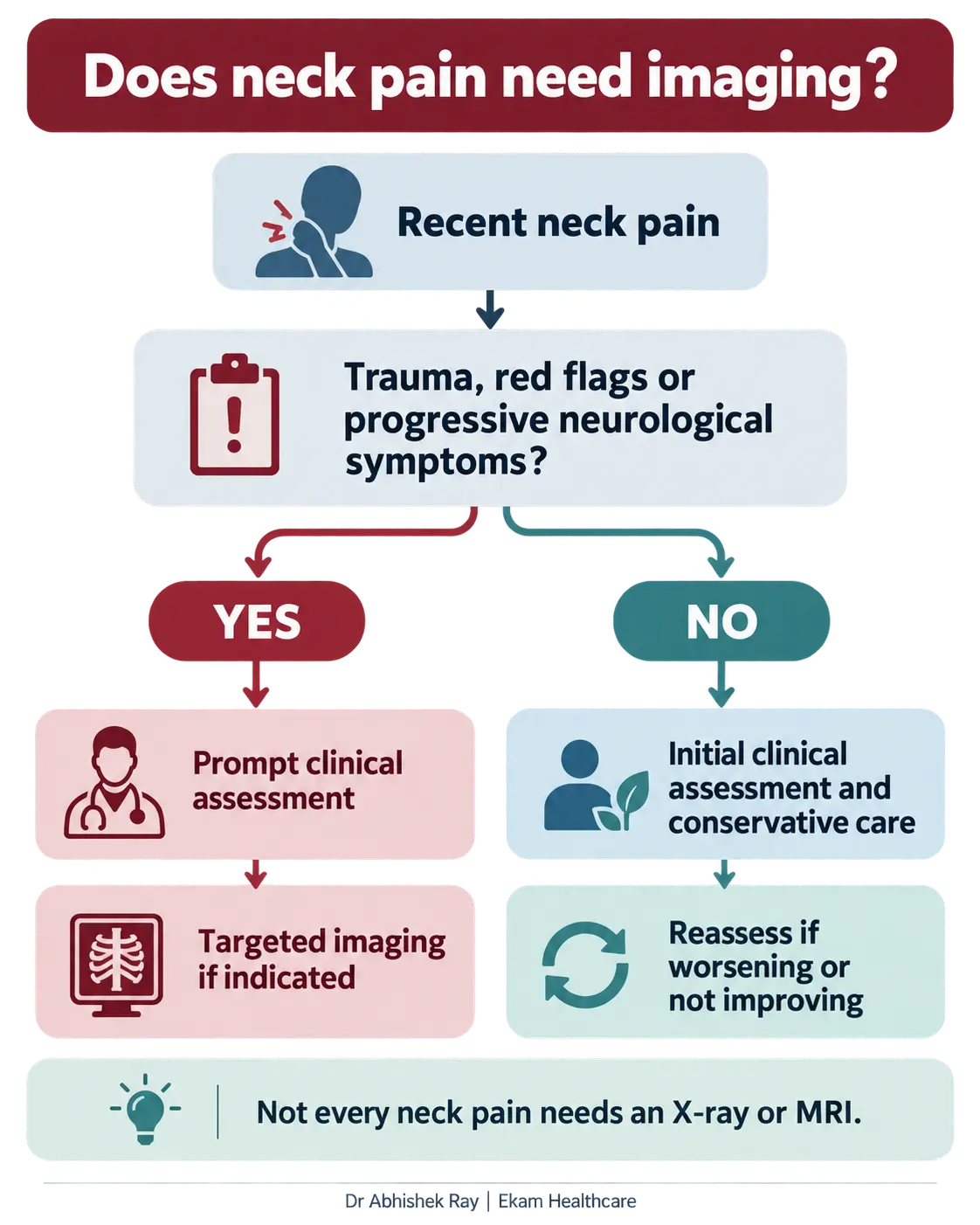
Does every patient need an X-ray or MRI?
No. In adults with recent non-traumatic neck pain, no neurological deficit and no red flags, immediate imaging is often unnecessary. History and examination usually determine whether initial conservative care is reasonable. The 2024 ACR criteria match imaging to the clinical scenario rather than recommending one test for every patient.[2]
| Test | What it shows best | When it may help | Important limitation |
|---|---|---|---|
| X-ray | Alignment, gross degeneration and some bony abnormalities | Selected trauma, persistent symptoms or suspected structural bony disease | Does not show the spinal cord or nerve roots well |
| MRI | Discs, nerve roots, spinal cord, marrow and soft tissues | Progressive neurological deficit, suspected myelopathy, infection or tumour; selected persistent radicular symptoms | Commonly shows age-related findings that may not explain pain |
| CT | Detailed bone anatomy | Selected fractures, bony lesions or when MRI is unsuitable | Uses ionising radiation and is less informative for cord and soft tissue than MRI |
A surgeon’s perspective: Imaging is diagnostic, not therapeutic. Repeating an MRI does not treat the patient. A repeat or different test should be ordered only when a change in symptoms, examination or treatment decision makes the result clinically useful.
What can you do during the first one to two weeks?
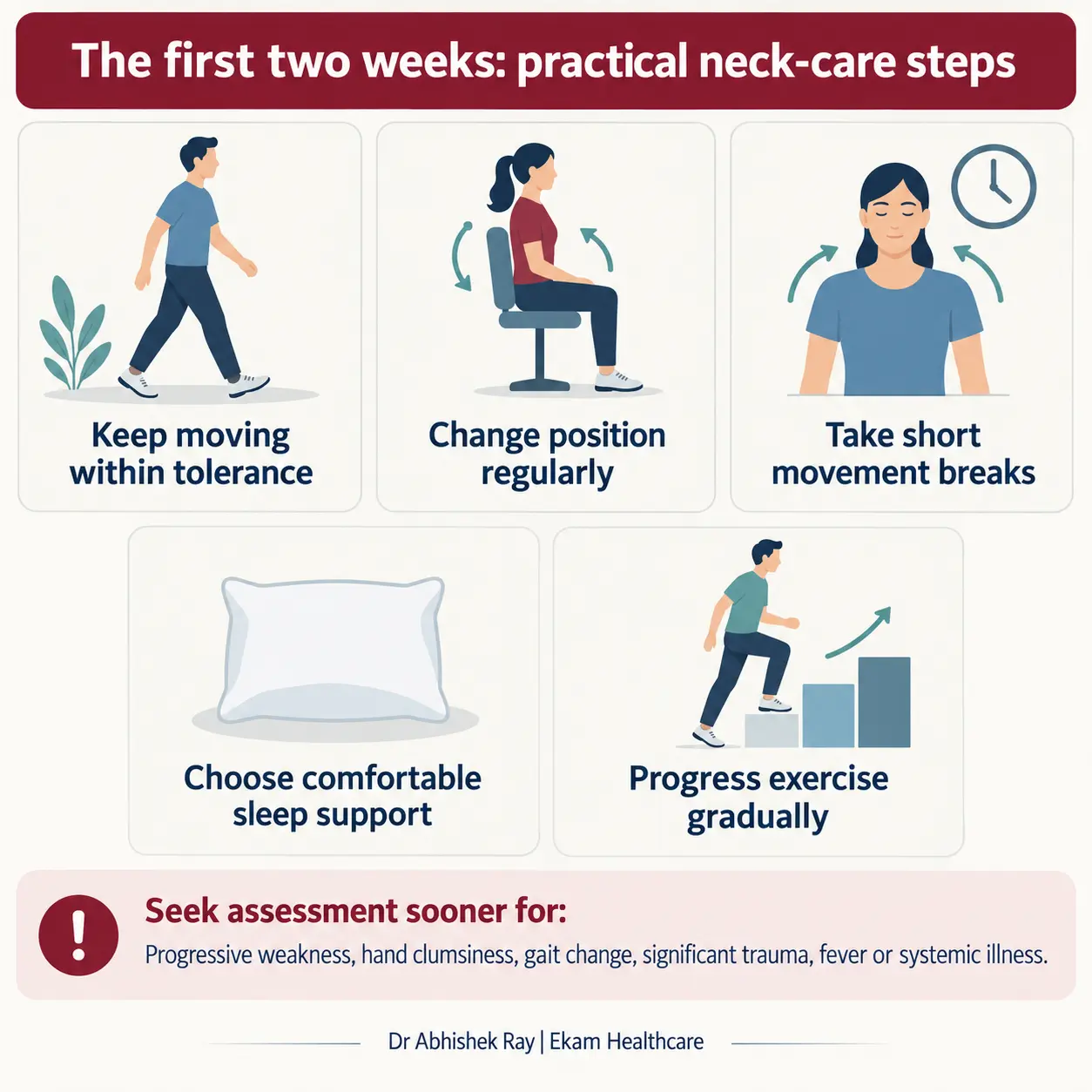
- Keep moving within tolerance. Continue ordinary work and daily activity when possible, modifying only tasks or positions that clearly aggravate symptoms.
- Avoid prolonged fixed positions. During phone or computer use, change position regularly, take brief movement breaks and bring the screen closer to eye level. There is no single perfect posture that must be maintained all day.
- Use short-term symptom measures appropriately. Heat or cold may provide temporary comfort. Medication should be individualised by a clinician or pharmacist, especially for people with cardiac, kidney, gastrointestinal or anticoagulation-related risks.
- Choose a comfortable pillow. Aim for a reasonably neutral, supported position, but do not assume one material or height is universally best. Evidence comparing pillow designs is limited and applies mainly to chronic neck pain.[6] Read more about sleeping postures for spine health.
- Introduce exercise progressively. Gentle comfortable movement can begin early. More structured mobility, endurance and strengthening can be advanced as severe pain settles and according to the clinical pattern.
- Arrange reassessment if the trajectory is wrong. Worsening pain, emerging arm weakness, hand clumsiness, gait disturbance or systemic symptoms matter more than an arbitrary number of days.
Treatments: what helps, what may help and what is often overused
| Approach | Usual role | Important limitation |
|---|---|---|
| Explanation and reassurance | Reduces fear and supports safe activity when serious disease has been excluded | Must not be used to dismiss progressive or systemic symptoms |
| Exercise-based rehabilitation | Especially useful for restoring mobility, endurance, strength and confidence in persistent or recurrent pain | No universal programme or dose; exercises should match the presentation |
| Manual therapy | May provide short-term benefit for selected patients when combined with active care | Should not replace exercise, education or neurological assessment |
| Medication | May provide short-term symptom relief and help maintain activity | Choice depends on comorbidity and risk; medication does not reverse age-related imaging changes |
| Soft collar | Occasional brief, selective use | Routine prolonged use can promote dependency and discourage active recovery |
| Traction | A possible supervised adjunct for selected radiating pain | Not a routine treatment for every neck pain; response and safety depend on selection and technique |
| Injections | Selected diagnostic or symptom-control role in defined conditions | Not required for uncomplicated mechanical pain; benefits and risks depend on procedure and indication |
| Surgery | Neural decompression or stabilisation in carefully selected cases | Not a treatment for an MRI abnormality alone |
Clinical guidelines generally favour education, advice, exercise and selected multimodal care rather than prolonged passive treatment.[7,8] Exercise evidence is strongest for some chronic presentations and remains heterogeneous; it should not be oversold as a guaranteed cure.[8]
When is surgery considered?
Most people with neck pain do not need surgery. Surgical assessment becomes more relevant when there is clinically significant spinal-cord or nerve-root compression—particularly progressive neurological impairment—or when well-selected non-operative care has failed and disabling symptoms correlate with a surgically treatable lesion. Surgery aims to address a defined mechanical or neurological problem; it cannot make every age-related scan change disappear or guarantee freedom from pain.
What is the likely outlook?
Many episodes of mechanical neck pain improve, but recurrence is not unusual. Recovery is influenced by symptom duration, sleep, work demands, physical capacity, stress, expectations and neurological status. Persistent pain does not automatically mean continuing tissue damage. Conversely, mild pain accompanied by progressive weakness or gait disturbance may be more important than severe pain without neurological deficit.
Myth versus fact
| Myth | What the evidence suggests | Practical meaning |
|---|---|---|
| “Every neck pain is cervical spondylitis.” | Neck pain has many patterns; younger adults frequently have mechanical pain without clinically important degeneration. | Diagnosis requires context, not a label. |
| “A disc bulge on MRI proves the cause.” | Degenerative findings occur in pain-free people and must match symptoms and examination.[3] | Treat the patient, not the report. |
| “Dizziness with neck pain must come from the neck.” | Cervicogenic dizziness is uncommon and a diagnosis of exclusion.[5] | Consider vestibular, neurological, cardiovascular and other causes. |
| “Rest and a collar are the safest solution.” | Prolonged inactivity and routine collar use can delay active recovery. | Use brief selective support only when clinically indicated. |
| “Spondylosis inevitably leads to surgery.” | Most patients are managed without surgery. | Surgery is reserved for a defined indication, not age-related change alone. |
Frequently asked questions
Can neck pain be serious even if the pain is not severe?
Yes. Pain intensity alone does not determine seriousness. Progressive weakness, hand clumsiness, gait imbalance, new bladder or bowel dysfunction, systemic illness or significant trauma can be more important than the numerical pain score.
How long should I wait before seeing a doctor?
There is no universal 48-hour rule. Seek earlier assessment for trauma, red flags, progressive symptoms, severe unremitting pain or neurological features. Otherwise, uncomplicated pain can often begin with sensible self-care, with review if it is worsening or not following an acceptable recovery course.
Should I stop working or using my phone?
Usually not completely. Modify tasks that clearly aggravate symptoms, avoid long uninterrupted periods in one position and take movement breaks. The goal is manageable activity, not rigid posture or fear-driven avoidance.
Is a hard or soft pillow best?
There is no universally best pillow. Comfort, sleeping position, body build and maintaining a reasonably neutral neck position matter. A pillow that repeatedly increases pain is unsuitable, whatever its marketing claims.
Can exercise reverse cervical spondylosis?
Exercise does not erase age-related changes on a scan. It may improve strength, endurance, movement confidence and function, helping many people control symptoms despite those changes.
Take-home messages
- Most neck pain is mechanical and does not automatically mean serious structural damage.
- Pain travelling into an arm may indicate nerve-root irritation; progressive weakness, hand clumsiness or gait change requires prompt assessment.
- Immediate imaging is often unnecessary when there is no trauma, neurological deficit or red flag.
- Age-related MRI findings are common and do not automatically explain symptoms.
- Dizziness should not be casually attributed to cervical spondylosis.
- Comfortable activity and progressive exercise are generally more useful than prolonged rest, collars or repeated passive treatment.
- Surgery is considered for a defined neurological or structural indication—not simply because a scan shows degeneration.
When to arrange an assessment
Arrange medical assessment when neck pain is severe, persistent, worsening, recurrent, interfering materially with sleep or function, or accompanied by arm symptoms. Seek urgent evaluation for progressive neurological features, significant trauma or systemic warning signs. This article provides general education and cannot diagnose an individual reader.
Dr Abhishek Ray
Orthopaedic & Spine Surgeon
Ekam Healthcare, City Centre, Durgapur, West Bengal
Appointments: +91 7797046722
References
- GBD 2021 Neck Pain Collaborators. Global, regional, and national burden of neck pain, 1990–2020, and projections to 2050. Lancet Rheumatology. 2024;6:e142–e155. doi:10.1016/S2665-9913(23)00321-1.
- Eldaya RW, et al. ACR Appropriateness Criteria® Cervical Pain or Cervical Radiculopathy: 2024 Update. Journal of the American College of Radiology. 2025;22. doi:10.1016/j.jacr.2025.02.035.
- Brinjikji W, Luetmer PH, Comstock B, et al. Systematic Literature Review of Imaging Features of Spinal Degeneration in Asymptomatic Populations. AJNR American Journal of Neuroradiology. 2015;36(4):811–816. doi:10.3174/ajnr.A4173.
- Fehlings MG, Tetreault LA, Riew KD, et al. A Clinical Practice Guideline for the Management of Patients With Degenerative Cervical Myelopathy. Global Spine Journal. 2017;7(3 Suppl):70S–83S. doi:10.1177/2192568217701914.
- Chang TP, et al. Risk of Cervical Dizziness in Patients With Cervical Spondylosis. JAMA Otolaryngology–Head & Neck Surgery. 2024;150(2):93–98. doi:10.1001/jamaoto.2023.3810.
- Pang JCY, Tsang SMH, Fu ACL. The effects of pillow designs on neck pain, waking symptoms, neck disability, sleep quality and spinal alignment in adults: a systematic review and meta-analysis. Clinical Biomechanics. 2021;85:105353. doi:10.1016/j.clinbiomech.2021.105353.
- Blanpied PR, Gross AR, Elliott JM, et al. Neck Pain: Revision 2017. Journal of Orthopaedic & Sports Physical Therapy. 2017;47(7):A1–A83. doi:10.2519/jospt.2017.0302.
- Corp N, Mansell G, Stynes S, et al. Evidence-based treatment recommendations for neck and low back pain across Europe: a systematic review of guidelines. European Journal of Pain. 2021;25(2):275–295. doi:10.1002/ejp.1679.
- Gross AR, Kay TM, Paquin JP, et al. Exercises for mechanical neck disorders. Cochrane Database of Systematic Reviews. 2015;(1):CD004250. doi:10.1002/14651858.CD004250.pub5.
1 Comments on “Neck Pain Explained: Common Causes and When to Seek Help”